
PETERSFIELD MUSICAL FESTIVAL
THREE DELIGHTFUL DAYS FULLY DESCRIBED.
It is no mere metaphor to say that music cast its spell over Petersfield for three successive days last week when the annual Musical Festival was held, but in a very real and pleasing sense this was quite literally true. For that period, as on previous occasions, the festival was the one and undivided topic of public interest and enjoyment, and the town was again the centre to which all music-lovers in the district who could possibly do so naturally gravitated in order to listen to a flood of melody and harmony from voice and instrument, the like of which few English country districts have the opportunity of taking pride and pleasure in. This was the ninth festival, and it is gratifying in the extreme to be able to record that in no way did it fall short of those which have gone before. In some respects there can be no doubt it outshone even the most brilliant of its predecessors and has left behind it a record of successes which is entirely satisfactory to all who feel confident, as we do, that: the festival has become so well rooted that it has a long and prosperous future ahead of it. All the elements which have combined in former years to make the event so flourishing were again present on this occasion. In the first place there has been no lack of that financial support which is so essential to maintain the institution at its present pitch of excellence. We notice that over 150 subscribers have assisted the funds. Then the festival again attracted the keen interest, as shown by their attendance, of as many if not more people during the time it was held. Further, the choirs participating in the competitions and the grand concerts were as numerous as ever. Artistes of rank and reputation were secured to help in the production of some of the finest works of the masters of music, which has always been one of the chief objects of the festival, and the presence of Dr. Allen to conduct the forces, including his fine orchestra, was not the cast of the factors which ensured a triumphant result. The weather on the whole was favourable, the first two days being beautifully fine and bright. On the last day, however, heavy rain set in just as the competitions were about to commence and continued without cessation for the rest of the day. This happily had little effect upon the attendance and absolutely none upon the enthusiasm which again marked the proceedings. Special trains were run in connection with the festival, and taking the three days together the attendance was fully up to previous records. Altogether we feel completely justified in describing the festival as quite equal to, if not surpassing, the best that has been organized.
The festival was again held in the Drill Hall which is by far the largest place available in the town, thanks to the kindness of the officers of the local company of the 6th Hants Regt. A special exit in the wall near the platform had been constructed and was in use this year. The festival committee are to be commended for their wisdom in making such a necessary provision against fire or panic. Many people have long wanted to see better means of getting out of the hall, and the committee have collected a special fund for the purpose. The arrangements of the festival were similar to last year, except for an alteration in the hours at which the competitions and concert commenced on the last day. The local committee, consisting of Miss Causton, Miss Long, Miss Gertrude Nicholson, Dr. Leachman, the Rev. G. Sampson, Mr. A. J. C. Mackarness, with Miss Grace Keily as hon. sec., did their work well. Miss Keily, of course, had the chief burden to bear, not only on the days of the festival but for some months before, and the manner in which she carried out the onerous duties again laid all who in any way participated in the festival under a great debt of gratitude to her. Congratulations must also be paid in all sincerity to the Music Selection Committee, which consisted of Miss Grace Keily, Mrs. Alexander Maitland, Miss Gertrude Sichel, Dr. H. P. Allen. Dr. Arthur Somervell, Dr. Vaughan Williams, Messrs Donald Tovey and Percy Such, with Miss Long as hon sec. We may here remark that the continued presence at the festival of Mrs. Alexander Maitland, one of the founders, gave very general pleasure. To a number of stewards who assisted in carrying out the festival arrangements an expression of thanks is due, and special recognition ought to be made of the work of the conductors of choirs, who must have laboured hard through many months to bring their choirs to the pitch of efficiency which so generally distinguished them this year. There is little doubt that the whole standard of singing was the highest yet reached, and though it may be improved in future years it is, we are assured by those who have had opportunities of judging, already one that would do credit to any similar festival in any part of the country. To the judges, Dr. Sweeting, of Winchester, and Mr. W. H. Hadow, of Oxford, both of whom officiated at the festival for the first time, warmest thanks are due. They carried out their responsible duties in an extremely agreeable manner which elicited the admiration and confidence of the choirs, and as will be seen from the reports hereafter of the competitions they incidentally gave the choirs many useful hints which if taken to heart cannot fail to improve the choral singing of the neighbourhood. Another whose services were greatly appreciated by the choirs, the soloists, and everybody who realised the importance of a skilled and sympathetic accompanist was Mr. Percy Whitehead, A.R.C.M., who officiated in that capacity at all the competitions and concerts with perfect success. We have now the pleasure of presenting our readers with full reports of the different events which combined to make the festival as a whole so strikingly successful. These are not, of course, written from the point of view of the skilled musical critic, but are impressions which we think must have been common to all lovers of choice music who attended the festival. We hope that what has been written will serve to bring afresh to the minds of those who attended the festival the delights which it afforded and to convey to any who were not present some adequate idea of what its attractions were like.
————
THE COMPETITIONS.
PETERSFIELD, HAMBLEDON & SHEET (CHILDREN) AT THE TOP.
Carrying out our usual custom we print in a supplement full details of all the competitions and record the judges’ criticisms. To the singers at any rate these will prove of interest, but for the benefit of the general reader we here append a summary of the results. During the three days 20 choirs in all sang at the festival. This is the same number as last year, and though some which have figured in previous festivals have, it is to be hoped temporarily, fallen out others have come to fill the vacancies and the number of competing choirs remains as high as ever it was. The first day this year seven children's choirs appeared,and in the place of Harting, Horndean, Waterlooville and Westmeon, which places were not represented in the children’s classes this year, new choirs from Petersfield, Rake and Redhill were welcomed, so that there was actually one less than last year. On the second day, however, the choirs in Division A numbered one more than last year. Sheet had gone up into the higher division, but Langrish and Privett who formerly participated in the competitions reappeared. On the last day the choirs in Division B were the same as last year with the exception of Sheet who took the place of Liphook, who at one time had fully intended to participate in this year’s festival but circumstances arose which led to a change of plans.
The children's competitions this year saw the Sheet choir (conducted by the Rev. G. Sampson) again well to the fore. They quite sustained the reputation which they have gained by means of intelligent and zealous training at the hands of Miss Ings and the Rev. G. Sampson for charming singing, and their performance was the most consistently good of the competing choirs this year. They won the banner offered for the first time this year for the highest aggregate of points in the competitions, being 10 points ahead of East Tisted. Sheet won the banner for the unison song, were second in the two-part song and second in sight reading. East Tisted (conducted by Mr. Arthur S. Elson) took chief honors in the two-part song and were third in the unison song. The sight reading test was won by Redhill (conducted by Miss A. J. Maynard), one of the novice choirs, who deserve special commendation for such a notable success, Sheet again being second. Rake, another of the new choirs (conducted by Mr. J. H. Hillier), made a creditable show for a first attempt, being placed second in the unison song. Privett (conducted by the Rev. W. H. Thomas), who won the sight reading prize last year, were equal second in that competition, but did not do particularly well in the other classes. Miss Ethel Causton's choir which was not eligible to compete for the prizes acquitted itself well in two of the classes. The total points gained by the various competing choirs were as follows :
| Sheet | 176 |
| East Tisted | 166 |
| Redhill | 160 |
| Rake | 155 |
| Privett | 153 |
| Petersfield | 130 |
The competitions on the second day were confined to four classes only instead of six as formerly. The most notable feature was the striking success of Hambledon at what may be termed a first venture, for though last year the village was represented by a female voice choir, conducted by Mrs. Harold Floud, this was actually the first appearance of a full choir. Miss Ethel Hodgson conducted the choir on this oceacion, and it at once gave proof of its qualities by winning the sight reading test and followed this up by a great triumph in the test chorus, in which they took first place and far excelled the performance of any other choir. In the next class for men’s voices the choir did not make anything like so good a show, but in the last class for madrigal singing they once more easily overtopped the rest, and moreover as after this series of successes one might have supposed they won the banner for the highest aggregate in the whole of the competitions with over 20 marks to spare. By the rules of the competitions Hambledon having already won two firsts, had to relinquish the madrigal prize to the next choir on the list, but they were nevertheless sufficiently loaded with honors. The performance almost rivals that of the Sheet choir last year which in this division came first in five out of six competitions, which constituted a record for the festival. Probably after such an exploit Hambledon will have to seek fresh laurels another year in the higher division. The other feature of the day’s competitions which calls for special comment is the positions attained by the Liss and Rake choirs under rather singular circumstances. For some years the Liss choir have been good triers in the competition, but this year found themselves several weeks prior to the date of the festival without a conductor. Right up to the morning on which they had to appear in the lists with the other competitors we believe they were still seeking for a conductor, but then Miss Causton generously came to their aid and under her able conductorship they did much better than at any previous attempt, actually winning a banner, which it is true come to them by reversion from Hambledon in the madrigal competition, and being a good second in the male voice competition, whilst in the aggregate for all the classes they were second. The judge particularly congratulated the choir and their resourceful conductor and his congratulations were warmly echoed by all who have watched the plucky attempts of the choir in previous festivals. The success should do much to stimulate and encourage the choir in future. Rogate (conducted again by Miss Winifred Murray), who did very well in last year’s competitions, did not reach a higher place than third in any of the classes. However, as the standard of singing was so good they have no reason to be discouraged and must bear in mind the real objects for which these contests exist. Harting (conducted by Mr. G. Frisby), come second in one class and third in another, and in the end were third in the list of aggregates. Privett (conducted by the Rev. W. H. Thomas), won the men’s chorus in fine style. Woolbeding (conducted by Miss Avis Elwes), were not so prominent as usual, and Langrish (conducted by Miss C. E. Talbot-Ponsonby), were handicapped by the fact that they had only had about half the time for practising the music that the other choirs had had, seeing that they only decided in January to enter the competitions. The judge especially commended Langrish for their performance under those circumstances. The aggregates marks obtained by the different choirs were as follows :
| Hambledon | 188 |
| Liss and Rake | 182 |
| Harting | 176 |
| Woolbeding | 164 |
| Langrish (3 classes) | 111 |
| Privett (1 class) | 68 |
The competitions on the third day were three in number as was the case last year. The singing was generally speaking excellent and the judge confessed that he had a most difficult task in having to make a discrimination between the choirs. In sight reading Purbrook (conducted by Miss Grace Keily), retained the challenge banner which they have held for so many years. We believe this is the sixth time since the festival started that Purbrook have come out top in this class. This year the reading was really most creditable to all the choirs, being uniformly good and in some cases quite admirable. The achievement of Purbrook is consequently all the more noteworthy and the choir must be heartily congratulated upon its ability in this respect. Redhill (conducted by Mr. H. Adams) were second in this class and Petersfield and Westmeon tied for third place. In the test chorus Horndean and Petersfield were separated by only one point. Petersfield (conducted by Miss Causton) won the medal for this competition last year and the year before, but this time were just beaten by Horndean (conducted by Miss Long). Petersfield however had the satisfaction of beating Horndean very decisively in the madrigal competition and out-distancing all other competitors. Not only did Petersfield win the challenge banner and prize for madrigal singing, but they had the proud distinction of securing the challenge banner offered this year for the first time for the highest aggregate of marks in the three classes, Purbrook who came second being three points behind. Sheet (conducted by Miss Edith Nettleship), did not do so well as some people had been led to expect. Their best performance was in the madrigal, and remembering that the singing throughout the competitions was so close the position they attained in the first year of promotion to this division was creditable to them. The total marks gained by the several choirs were as follows :—
| Petersfield | 131 |
| Purbrook | 128 |
| Horndean | 126 |
| Redhill | 125 |
| Sheet | 117 |
| Westmeon | 113 |
Throughout the competitions the attendance of the public was as big as ever, in fact on the first day at any rate it was a record. Both on Wednesday and Thursday the hall was well filled while the choirs were competing and even on Thursday afternoon when the weather was very wet there was as large an audience as usual. The greatest interest was evinced in all the competitions and the choirs were encouraged by the hearty applause which greeted their efforts.
MISS GRACE KEILY
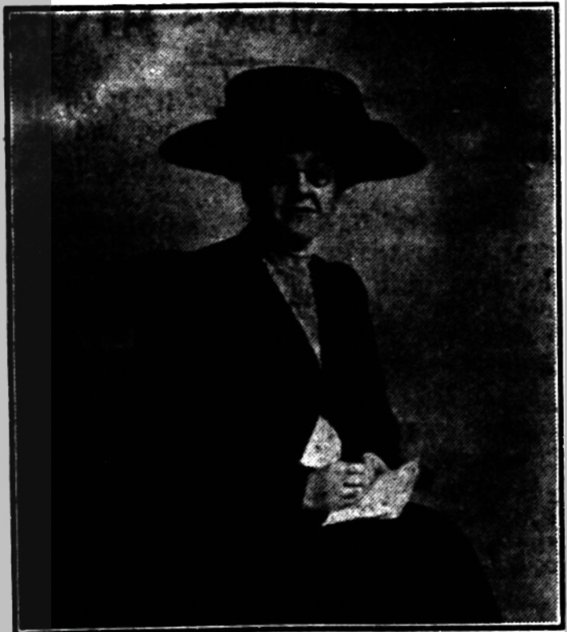
Miss Grace Keily, of Morelands, Purbrook, has been closely identified with the festival ever since its inauguration. She has conducted the Purbrook choir from the commencement. Three years ago she succeeded Miss Craig Sellar (now Mrs. Stewart Gemmell) as hon. sec., and in that capacity has done splendid service.
DR. H. P. ALLEN.
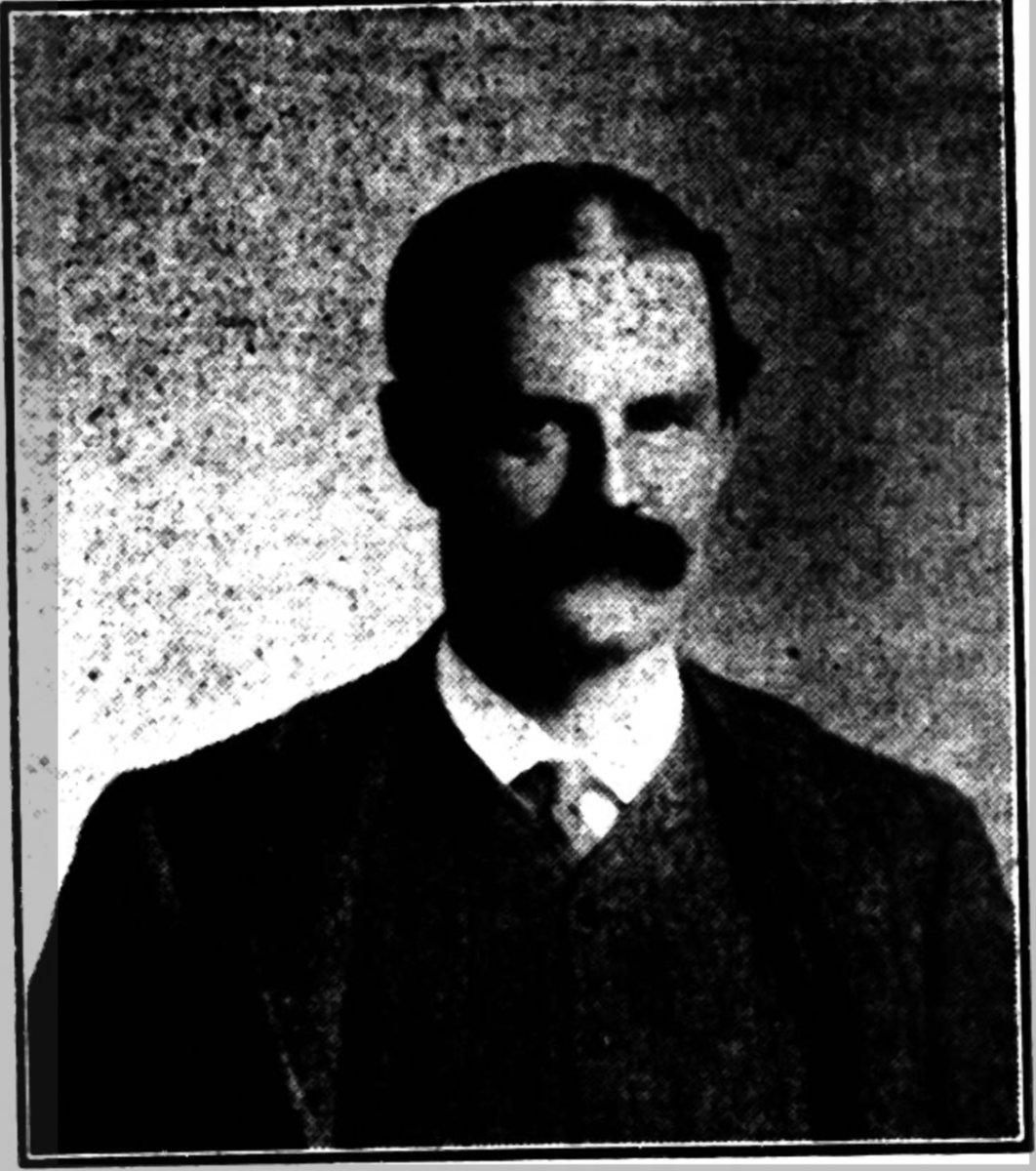
Dr. H. P. ALLEN, the very talented and popular conductor of the Petersfield Musical Festival, is a native of Reading. He gave up an appointment of music master at Wellington College to be assistant to Dr. Read at Chichester Cathedral. He gained the organ scholarship at Christ’s College, Cambridge, where he took his B.A. He took an active interest in the Cambridge University Musical Club. From Cambridge he went to St. Asaph Cathedral, N. Wales, but soon vacated this for the more important post of organist of Ely Cathedral, where he succeeded Mr. Tertius Noble. From thence he went, about six years ago, to New College, Oxford, where he still is. Since he has been at Oxford he has been made a Fellow of New College. He is conductor of the Oxford Bach Choir and the Oxford Choral and Philharmonic Society. He has also his own orchestra there, and is the conductor of the London Bach Choir. His connection with the Petersfield Musical Festival dates from 1904, when he conducted for the first time. At the 1905 and 1906 festivals he officiated both as judge and conductor. In 1907 he came as conductor, and last year he assisted Dr. Vaughan Williams in judging the competitions and conducted at the concerts.
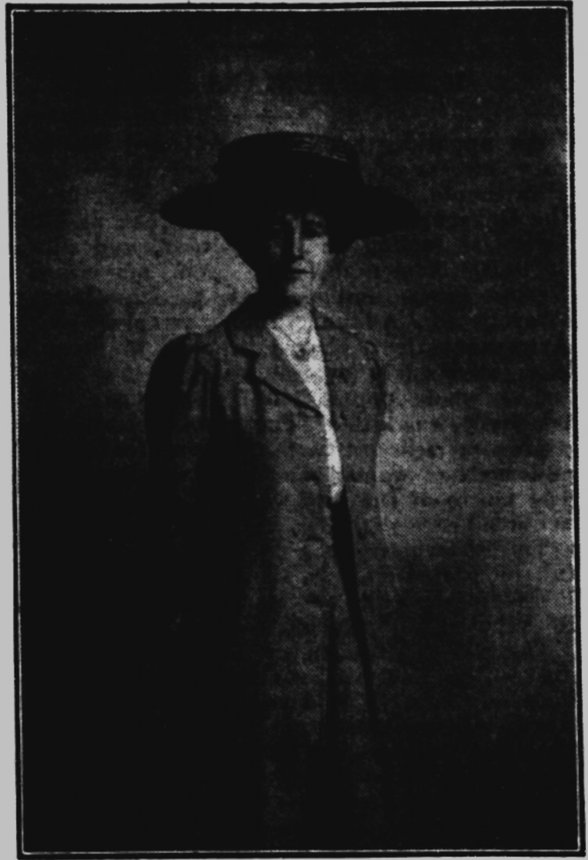
MISS LONG, of Blendworth Lodge, Horndean, has been an enthusiastic worker for the festival during the whole period of its existence. She succeeded her sister as conductor of the Horndean choir, and for the last two years has been hon. sec. of the Music Selection Committee.
THE CONCERTS
A report of the concert on the first day appeared in our last issue. We had intended to reproduce it this week so as to make the account of the festival so much the more complete, but regret that space will not permit.
EXCELLENT PRODUCTION OF MENDELSSOHN’S ‟LORELEY.”
MISS CHABÔT’S SPLENDID RENDERING OF A BEETHOVEN SONATA.
The concert which was the concluiling event of the second day was without doubt one of the most pleasing and altogether delightful ever given at that stage of the festival. The audience that assembled quite crowded the hall and the programme was carried through with great éclat and to the unbounded enjoyment and admiration of the enthusiastic assemblage. The success was unbroken from start to finish, the performance was kept at a high level of excellence and singers and instrumentalists alike could take to themselves the gratifying reflection that the audience thoroughly appreciated the manner in which they produced the charming music chosen for the occasion. The chorus, consisting of the Hambledon, Harting, Langrish, Liss and Rake, Rogate and Woolbeding choirs, numbered about 200 voices. The orchestra, some 50 strong, was mainly composed of the members of Dr. Allen’s Oxford Orchestra with wind players fron the London Symphony Orchestra. Of the chorus it must be acknowledged at the outset that in tone and balance of parts it proved as satisfactory as any combination of voices ever heard at a Wednesday musical festival concert, in fact we are inclined to think it excelled the choruses of previous years in those respects. Of its capacity for clear, intelligent and expressive singing we think there can be no doubt, as the works which it undertook to interpret at this concert demanded powers which only careful and well-trained choirs possess and they were one and all performed with great success. The orchestra needs no special introduction for it is sufficient to mention of whom it was composed to convey to Petersfield people the knowledge that it was perfectly qualified for the part which it took in the concert scheme. This as on former occasions was in no way subsidiary to the choral portion of the entertainment. If any distinction is to be made it ought perhaps to be awarded the premier place, for again the programme was very largely orchestral in character and the audience must have revelled in the opportunity once more offered of enjoying first-rate interpretations of some of the choicest orchestral works. Without Dr. Allen’s orchestra the festival would indeed be shorn of one of its chief attractions and we cannot too greatly emphasise the debt which we feel music lovers owe to the committee of management for inducing this highly trained body of musicians to come year after year to lend so much musical distinction to the festival. Their attainments this year fell in no way short of previous triumphs and the remembrance of their share in the brilliant success which attended this concert—and also the one the following night—will not soon fade from the minds of the hundreds who found the purest pleasure in listening to the orchestral selections. Having Dr. Allen to conduct them the choirs and orchestra knew that they had only to respond to the utmost of their powers to his touch to ensure success and as usual they felt the inspiration of his guidance and gave of their best with results which redounded to the credit of all. As soloist in the chief choral work Miss Viola Slavin eminently revealed her fitness for such a part. A feature of the concert, which is not likely soon to be forgotten, was the appearance of Miss Kathleen Chabôt, who displayed gifts as a solo pianist which won the warmest admiration of the audience. Several pianists of wide repute have assisted the Petersfield festival at different times but we doubt if the success of any of them in captivating the audience has been more spontaneous than that which attended Miss Chabôt’s charming performance.
The programme as usual opened with ‟God Save the King,” conducted by Miss Keily. Then the orchestra, as a recognition doubtless of the centenary of the composer’s birth which is being celebrated this year, played Mendelssohn’s Scherzo and Nocturne from ‟Midsummer Night’s Dream.” The very delightful music was splendidly translated, the wind instruments producing some lovely effects. The combined choirs next rendered Charles Wesley’s smoothly flowing and rhythmic anthem, ‟Sing aloud with gladness.” This was sung unaccompanied and the effect was very fine, the choirs singing clearly and with nice precision and a due regard to the spirit of the work. There were few faults perceptible, and though at one time the voices dropped somewhat in pitch it was on the whole very well maintained and we must warmly compliment the choirs upon this performance. Then came one of the very best items of this year's festival viz., Beethoven’s glorious pianoforte concerto in C minor magnificently translated with characteristic grace and beauty by Miss Chabôt accompanied by the full orchestra. The result was delectable in the extreme. The different movements—allegro con brio, largo and rondo—were all rendered with a delicacy of touch, a sensitiveness and an appreciation of the composer’s thoughts which greatly impressed the audience. Miss Chabôt will never lack enthusiastic listeners in Petersfield and everybody who witnessed this revelation of her powers will hope to have the privilege at some other time of hearing her play again. Almost before the last strains of the concerto died away the audience broke out into a storm of applause and the pianist was recalled four or five times before this tribute to her talent ceased.
The distribution of prizes by Lady Wyndham then took place, Mr. A. J. C. Mackarness calling out the names of the winners. Miss Ethel Hodgson and Miss Causton, the conductors of the successful choirs, were both very heartily applauded on going up to receive the banners from the hands of her ladyship. Mr. Mackarness afterwards moved a vote of thanks to Lady Wyndham for coming there that night to give away the prizes. He could, he remarked, say a good deal about her kindness and the interest she had always taken in the festival but he was under the very strictest orders that he must not occupy half a minute at the outside. The vote of thanks was passed with much applause.
The concert was renewed with a very creditable rendering by the male voices of Elgar’s difficult part song ‟Feasting I watch with westward looking eye” from the Greek Anthology. Then the combined choirs sang the very tuneful madrigal ‟April is in my mistress’ face” (Morley). The rendering was an extremely good one and greatly pleased the audience. Afterwards Dr. Allen’s orchestra gave a grand interpretation of Wagner’s lovely ‟Siegfried Idyll.” The combined choirs and orchestra then addressed themselves to the chief work chosen for their performance on this occasion. This was the unfinished opera ‟Loreley” by Mendelssohn. It will thus be noticed that the concert began and ended with examples of Mendelssohn’s genius, a graceful tribute thus being paid to the noble artist who did so much to enrich the musical heritage of this as well as his native land. The opera depicts Leonora, the daughter of an innkeeper on the Rhine, having been deserted by her lover, calling upon the Rhine fairies to avenge her. They turn her into Loreley, a siren who haunts a rock of the same name on the banks of the river and by her singing entices fishermen and sailors to destruction. The music consists of an exquisitely beautiful Ave Maria, the well-known ‟Vintage Song” (which formed the subject of the competition for men’s voices at the festival last year) and the ‟Finale,” a long dialogue between Leonora and the Rhine fairies abounding in intensely passionate and dramatic passages. The performance all through was most admirable and the enjoyment of the audience was profound. It was an excellent test of the capacity of the choirs and they interpreted the music thoroughly well, expressing in a manner which reflected the very greatest credit upon them the spirit of the theme and the wonderful resources of musical art employed in this grand composition. The orchestra of course played a very considerable part in making the performance so very impressive and the capital singing of Miss Viola Sabin in the rôle of Leonora was in every way suited to the work and enhanced the reputation she has gained. We have no space to comment in any detail upon the production, which taken as a whole was indeed so ably done that to venture on criticism would be unwarrantable. It was a very fine conclusion to a first-rate concert and one of the most delightful things the festival has brought forth. Mr. Percy Whitehead, A.R.C.M., was the accompanist at this concert and needless to say he fulfilled the requirements with the utmost competence.
FINE PERFORMANCE OF MOZART’S REQUIEM AND OTHER SACRED WORKS
MR. FRANCIS HARFORD SINGS STANFORD’S ‟SONGS OF THE SEA.”
In the final concert held on Thursday night the work of the choirs, who may be regarded as the most efficient and highly trained of those which participate in the festival, was with the aid of Dr. Allen and his orchestra brought to a glorious fruition. AU previous achievements in our opinion were eclipsed by this one, and we feel confident there were few present at this memorable event who will be inclined to gainsay it. There had as usual been a great demand for tickets. Of the reserve seats only a comparatively few of the five shilling tickets remained unsold, and probably had the weather been favourable these would have been filled. Unfortunately, however, the storm that raged kept some people away who otherwise might have been present, but practically all the ticket holders faced the inclement climatic conditions in order to enjoy the rich musical treat which they had been promised. The unreserved seats filled up well, and although under the circumstances the hall was not so crowded as in former years, there was an audience in every way worthy of the occasion, testifying once more to the firm hold which the festival has gained upon the people of the locality and its attractiveness to many from places far distant. The chorus at this concert consisted of the Horndean, Petersfield, Purbrook, Redhill, Sheet and Westmeon choirs, and the orchestra was, we believe, somewhat strengthened in wind instruments. Miss Keily, who was greeted with cordial applause, again conducted the singing of ‟God save the King,” and it was interesting to notice that Miss Long, as on the previous evening, appeared in the orchestra as performer on the big drum, which she seemed to play to perfection.
The distribution of prizes came at the beginning of the programme, Lady Clarke Jervoise kindly undertaking the pleasant duty. When it came to the turn of Miss Causton to receive on behalf of the Petersfield choir the banner for madrigal singing and for the highest aggregate in the competition Mr. A. J. C. Mackarness called attention to the fact that the top marks were 131 and the lowest 113, which went to show that there was real excellence all-round on the part of the choirs. He then alluded to the new exit which had been constructed in the hall, and said it was not altogether paid for, but some £5 or £6 was still wanted, and he had been asked to notify to anyone who might be desirous of so doing that a few further contributions would be very welcome. The committee, he continued, felt they owed a special vote of thanks to Mr. Sampson, who was really most indefatigable and did an enormous lot for the festival. He was always there ready to do anything, and he did it quite quickly when he was asked to do it. He really was Miss Keily’s right-hand man on the spot, and he (Mr. Mackarness) had been asked to move a vote of thanks to him, and this he did with very great pleasnre.—(Applanse). He also explained that Dr. Allen had had a very important engagement in London that afternoon and he was unable to get back in time for the commencement of the concert, but arrangements had been made by Miss Keily to bring him back on arrival at Guildford either by motor car, special train or airship, whichever he considered the quickest (laughter), and he believed he would alight there in about five minutes. In conclusion Mr. Mackarness proposed a hearty vote of thanks to Lady Clarke Jervoise for being so good to come and give away the prizes. As many of them knew she had really only just come into the neighbourhood, and it was a pleasing thing to think that she immediately started to take a great interest in that musical festival. The audience signified their concurrence by loud applause, and then the concert, which being largely sacred in character differed considerably from that of the previous evening, really began.
The first item was the chorale, ‟Jesu, joy of men’s desiring" (J. S. Bach), excellently rendered by the combined choirs and orchestra. Dr. Allen had not arrived, and Mr. Dent, a member of the orchestra, took his place on the rostrum and conducted this selection. It is an admirable example of Bach’s power to produce imposing effects in this class of writing, and was finely sung. Dr. Allen put in an appearance directly afterwards and met with an enthusiastic welcome by the audience. He decided to at once proceed to the chief task which had been entrusted to the choirs and orchestra, viz., the performance of Mozart’s ‟Requiem” Mass, of which there had been a full rehearsal under Dr. Allen in the morning. This work, as all students of music know, is one of the sublimest and most poetic compositions extant. The pathetic circumstances under which it was written are familiar we should suppose to the majority of those who composed such an audience as that which had the privilege of hearing the music translated on this occasion. The Mass was commenced only a short time before the composer died, and his last hours were actually spent upon the manuscript of it. It remains and will remain for all time a most noble monument to the genius of the immortal Mozart. That such a work should be chosen for production at the Patersfield festival is in itself clear testimony to the progress in the exercise of the art of choral singing which has been made in the neighbourhood during the last nine years. It is certain the committee would not have selected it had they not been confident that the choirs could do it justice. The choirs themselves when wrestling during the past winter with the difficulties of the music and the Latin text must no doubt sometimes have been inclined to question the wisdom of the choice, and perhaps to harbour misgivings as to the result. But Dr. Allen and those associated with him on the music selection committee evidently realized far better than the choirs themselves the things of which they were capable. The result fulfilled entirely, we have every reason to feel sure, the conductor’s expectation. It was truly a grand performance, worthy of the solemn subject and the deep devotional spirit which pervades the composition. The choruses were ‟Requiem Æternam” (Grant them O Lord), ‟Christe Eleison” (Show Thy mercy), ‟Dies Irae” (Day of wrath), ‟Rex Tremendæ” (King tremendous), ‟Confutatis Maledictis” (When the cursed), and ‟Lachrymosa” (Day of mourning), and these were one and all interpreted by the choirs with splendid effect. The choral singing indeed struck us as quite the best in all those qualities essentially desirable that we remember hearing at any Peterefield festival. Dr. Allen himself was, we have reason to know, greatly pleased with it and with the way in which the singers managed the Latin text, and if he is satisfied there can be little fault for anybody else to find. The soloists were Miss Viola Salvin, Miss Sara Silvers, Mr. Charles Child and Mr. Francis Harford. With the exception of Miss Silvers these have all rendered very appreciable service at previous festivals. All four now sang extremely well and with much taste and feeling. In the quartette ‟Tuba Mirum” and ‟Recordare,” their voices blended admirably. The orchestra had an onerous task in accompanying the work, which otherwise would have lost much of its majesty and power, and did it with that unqualified success which usually wait upon their performance under the direction of their very clever conductor. Following the ‟Requiem” Mr. Francis Harford sang four most interesting songs of varied character, but all well adapted to show the splendid quality of his voice and his finished style. There were (a) ‟Waldesgespräch” (Jensen), (b) ‟The Princess,” and (c) ‟The Swan,” both by Grieg, and ‟I’ll sail upon the Dogstar” (Purcell). At the end he was enthusiastically recalled. The orchestra next gave a surpassingly beautiful performance of Weber’s magnificent overture from his most celebrated opera, ‟Der Freischütz.” The audience listened entranced to the enchanting music which is marked by such ardent national feeling and originality of treatment. Afterwards the combined choirs and orchestra gave another sample of Bach’s choral music in the sacred cantata, ‟Thou Guide of Israel.” This is a delightful composition, and the singers rendered it with a freshness and an appreciation of its demands which were most pleasing to listen to. The choirs sang the opening chorus, ‟Thou Guide of Israel” and the choral, ‟The Lord my Guide,” which closes the cantata, with the utmost credit. Mr. Charles Child sang the tenor recitative and the aria, ‟His face my Shepherd long is hiding,” in good style and with very nice feeling. Mr. Francis Harford rendered the bass recitative and the aria, ‟Ye happy flock, the sheep of Jesus,” extremely effectively and artistically, this being quite one of the most impressive features of the work. The combined choirs next contributed the madrigal, ‟Corydon, arise!” (C. V. Stanford) with such choice effect as to evoke an enthusiastic encore. It was a capital reading of a composition calling for clear, crisp singing and not by any means easy to render, and it fully deserved this recognition of its merits by the audience. Last of all Mr. Harford simply charmed the audience with Stanford’s exquisite ‟Sea songs,” sung to orchestral accompaniment. These poems are by Henry Newbolt, and are entitled ‟Drake’s Drum,” ‟Outward Bound,” ‟Devon, O Devon in wind and rain,” ‟Homeward Bound,” and ‟The Old Superb.” The thrilling words set to wonderfully descriptive music and conjuring up glorious and vivid pictures which cannot fail to stir the hearts of Englishmen simply captivated the audience when rendered as Mr. Harford rendered them with consummate art, deep feeling and magnificent vocal quality, heightened by orchestral effects which helped very materially to make the whole performance one of the most charming imaginable. In "The Old Superb” the male voices of the choirs joined in the spirited chorus with capital effect. No more popular ending to the brilliant concert could have been desired. Mr. Percy Whitehead again rendered most efficient and skilful service as accompanist to some of the items on the programme.
Full reports of the competitions, with the judges’ comments thereon, are published in a special supplement to this issue.
The portraits, which we have pleasure in reproducing on this page, were taken by the Misses E. and E. Pickering, Petersfield, for the Hants and Sussex News, at special sittings kindly given by Dr. Allen, Miss Keily, and Miss Long last week.